
Welcome to this week’s Field Notes. This is week 158 of a 10-year project documenting humankind’s digital transition from the field, shaped by what I’m seeing, building, and discussing as physical and digital life continue to converge.
- Ryan
For the past few years I’ve been writing under the banner of the “metaverse”, documenting the convergence of digital assets, emerging technology, and how our physical and digital lives are slowly folding into one another. That work continues. What’s changing is simply the language I’m using to describe it.
The word “metaverse” did a lot of work early on. It gave people a handle for a broad set of shifts that were hard to name. Over time, that label has become noisy, politicised, and often detached from the quieter, more consequential changes happening underneath. The systems kept evolving. The term didn’t.
So rather than defend a word, I’m choosing to be clearer about the work itself.
This publication is now framed as Field Notes with Ryan Johnson-Hunt: a 10-year field project documenting humankind’s digital transition.
That framing better reflects what this has always been.
I’m not trying to predict the future, sell a narrative, or package trends. I’m paying attention to what I’m seeing and the conversations I am having with the people building the future. Writing weekly notes shaped by what I’m building, who I’m speaking with, where friction shows up, and where progress happens quietly.
What hasn’t changed is more important than what has.
I’m still writing weekly.
I’m still committed to a full decade (I’m 30% of the way there.)
I’m still focused on digital finance, frontier technology, and how people actually live with these systems.
I’m still treating this as a working notebook rather than a polished media product.
Think of this less as a rebrand and more as tightening the lens.
The terrain is the same. The expedition continues.

News is surface-level. Signals live underneath. This section captures developments that hint at deeper shifts in how digital systems are being built, governed, and adopted — often before they’re obvious in the mainstream narrative.
This might be the moment the Apple Vision Pro stops feeling like a beautifully engineered answer in search of a question.
Apple has released an open-source model that can generate a full 3D scene from a single 2D image. One photo in, spatial depth out. No lidar sweep. No hundreds-of-images photogrammetry ritual. Just inference.
That matters because Vision Pro has never really had a content problem. It has had a friction problem. Spatial computing only works if moving from the flat world to the volumetric one is effortless. This collapses that gap.
The signal here is subtle but important. Apple is not betting on bespoke 3D capture workflows. It is betting on intelligence filling in the missing dimensions. That is a familiar Apple move: hide complexity, let software do the hard work, and make a premium device feel inevitable rather than indulgent.
If spatial computing is going to tip, it will not be because headsets get cheaper. It will be because everyday images quietly become spatial by default.
This is the first feature that makes Vision Pro feel less like a demo, and more like a tool.

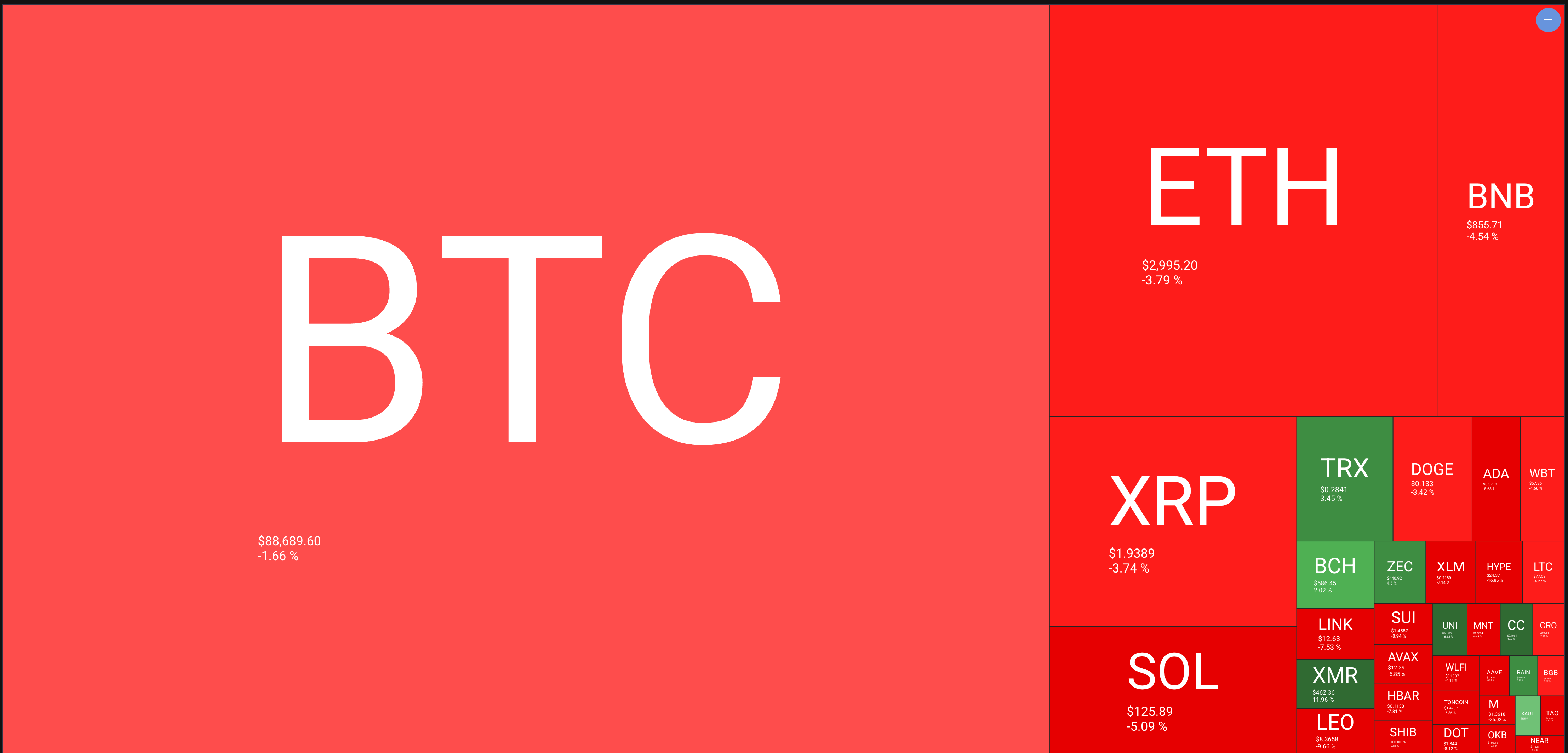
Digital assets now sit less as an idea and more as infrastructure in progress. As physical and digital life continue to converge, money and assets are doing the same. What was once framed as “crypto” is increasingly showing up as rails, balance sheets, and policy conversations.
🔥🗺️Heat map shows the 7 day change in price (red down, green up) and block size is market cap.
🎭 Crypto Fear and Greed Index is an insight into the underlying psychological forces that drive the market’s volatility. Sentiment reveals itself across various channels—from social media activity to Google search trends—and when analysed alongside market data, these signals provide meaningful insight into the prevailing investment climate. The Fear & Greed Index aggregates these inputs, assigning weighted value to each, and distils them into a single, unified score.


This section captures developments at the edge of digital systems. New interfaces, tools, and capabilities that feel early, unfinished, or slightly ahead of their moment. I’m less interested in what’s impressive today and more interested in what might quietly reshape how people work, coordinate, and interact over time.
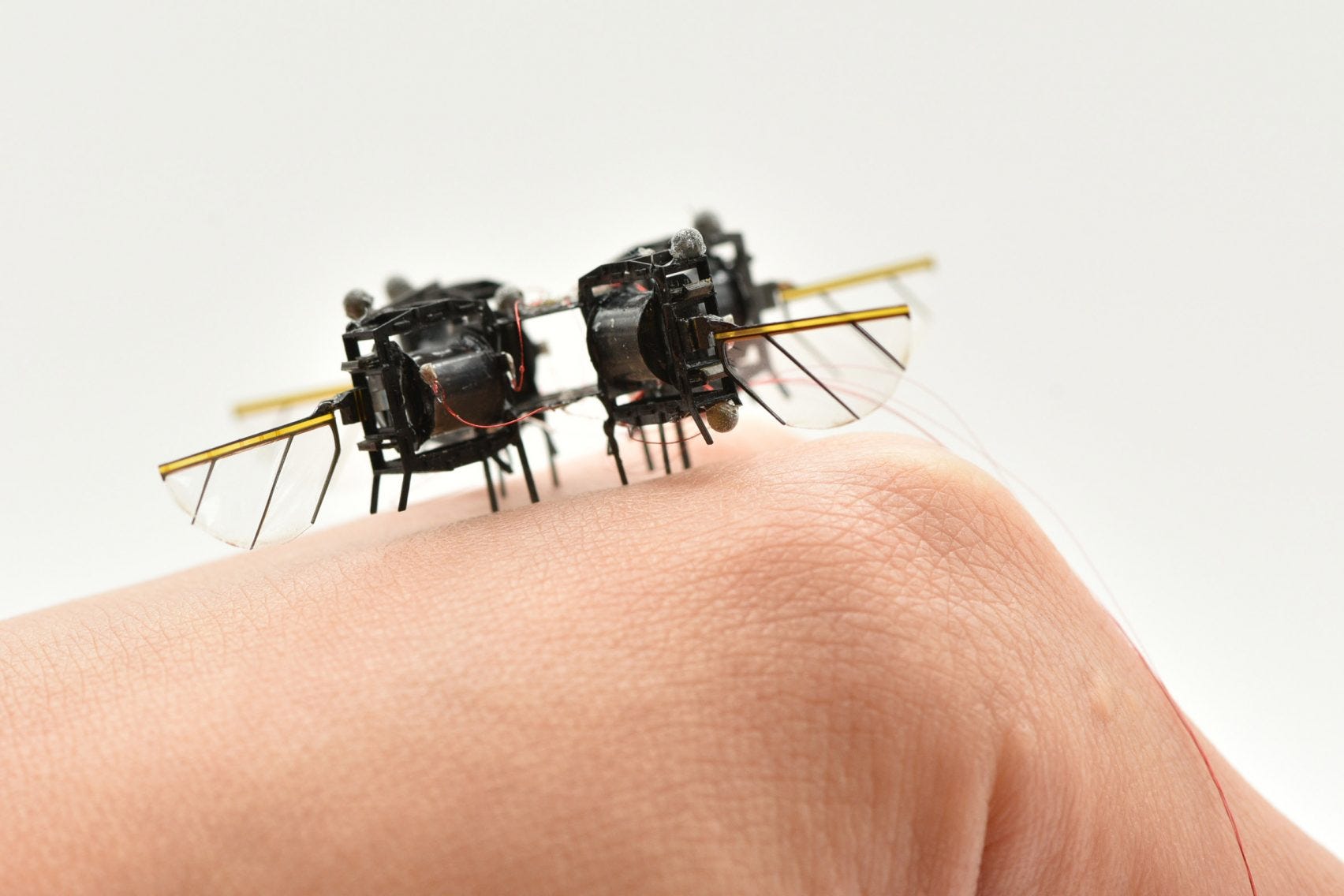
Researchers at MIT have built a bee-sized flying robot that moves with insect-level agility, including rapid turns and mid-air somersaults. The real advance is not the size, but the control layer.
Instead of relying on hand-tuned rules, the robot uses an AI-driven controller that learns how it behaves in unstable conditions and adapts its wing motion in real time. At this scale, air is chaotic and physics is unforgiving. Prediction beats precision.
In the near term, this points to search-and-rescue and inspection in spaces humans cannot reach. Longer term, it hints at something bigger. Intelligence migrating into control systems allows machines to shrink without becoming fragile. That is how swarms, resilience, and new forms of physical infrastructure quietly emerge.
Tiny robot. Meaningful shift.
Parting Thought:
“No problem can be solved from the same level of consciousness that created it.”
— Albert Einstein
A useful reminder that most breakthroughs do not come from better answers, but from better questions. Optimisation keeps systems running. Perspective change is what allows them to evolve.
Progress begins when we are willing to question the assumptions that once felt immovable.