
Welcome to this week’s Field Notes, a 10-year project of mine documenting humankind’s digital transition from the field. These notes are shaped by what I’m seeing, building, and discussing as our physical and digital lives continue to converge.
- Ryan
(Connect with me on LinkedIn)

News is surface-level. Signals live underneath. This section captures developments that hint at deeper shifts in how new systems are being built, governed, and adopted — often before they’re obvious in the mainstream narrative.
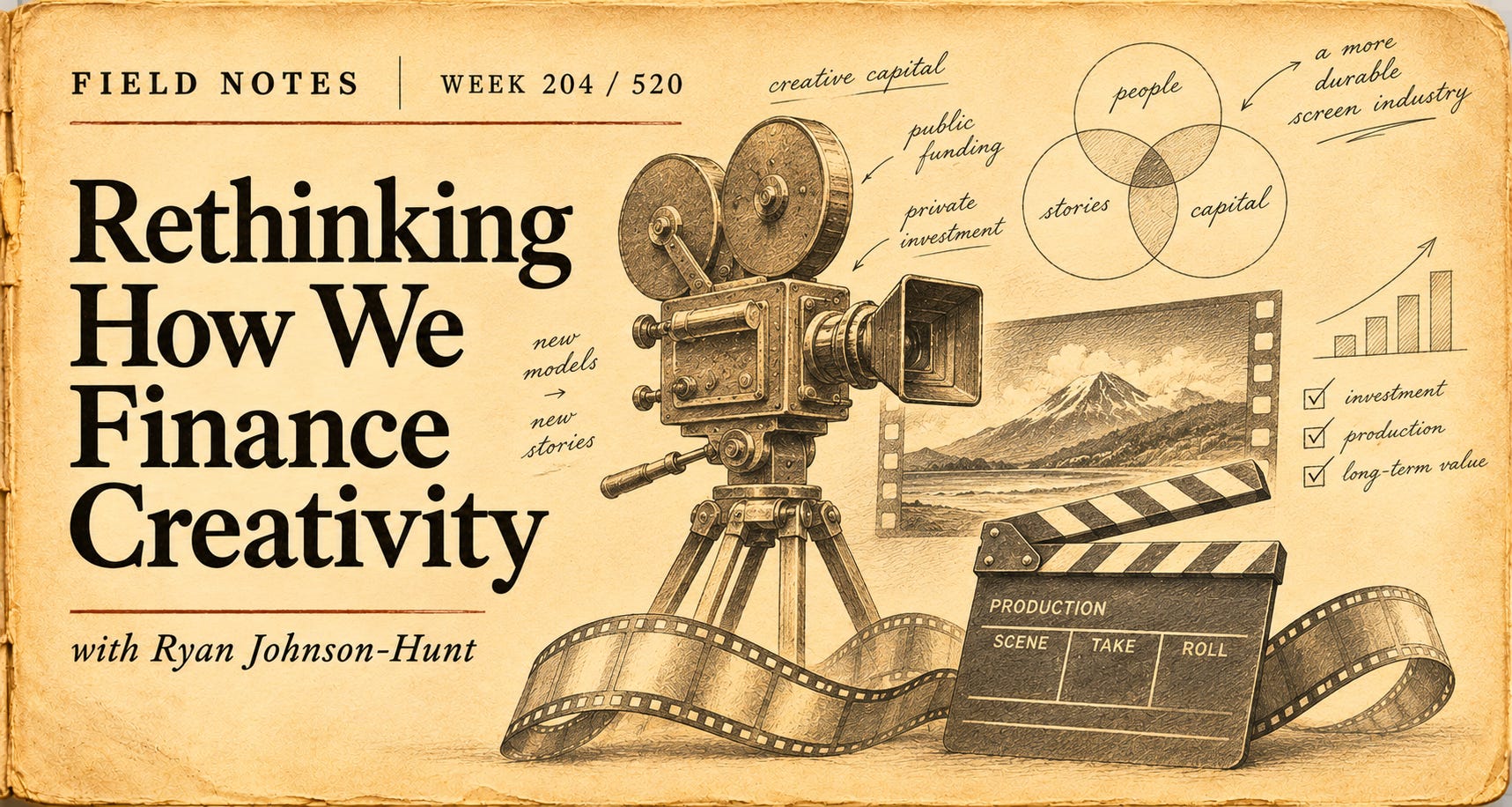
The Changing Economics of New Zealand’s Screen Industry
This week, New Zealand’s film and television industry gathered for the New Zealand Screen Awards, celebrating the people and productions that continue to carry Aotearoa’s stories onto screens here and overseas. Behind those achievements, however, the industry is navigating a difficult economic environment. A new report commissioned by the New Zealand Film Commission, published on 20 November, offers a timely account of the pressures facing the sector and the structural changes that may be needed.
Written by industry practitioner Lisa Chatfield and informed by conversations with 59 participants, the report describes an industry with considerable creative and technical capability, but one increasingly constrained by reduced commissioning, rising production costs, competition for limited funding and fragmented representation. One recurring concern is the difficulty of maintaining sustainable businesses and careers when work arrives project by project, often with long periods of uncertainty in between. The report calls for stronger industry collaboration, more consistent engagement with government and a shared long-term direction.
The question of funding sits beneath much of this. Public investment remains central to New Zealand’s screen industry, and the Government committed another $185.3 million over four years to support the domestic Screen Production Rebate in May. Yet elsewhere, financial pressure is forcing changes, including the Film Commission’s recent decision to end its core funding programme for industry organisations in June 2027. Different funding streams serve different purposes, but together they illustrate how the industry’s operating conditions are shaped by public spending decisions.
Creative industries need continuity to develop intellectual property, retain experienced people and establish businesses capable of operating internationally. Political priorities and public budgets, meanwhile, can change considerably over the years required to bring a production to market. There is an increasingly interesting conversation to be had about how private investment, commercial partnerships and alternative financing structures might complement public support, providing greater certainty while allowing the industry to retain more of the long-term value it creates.
Indigenous Finance Begins to Find Its Own Scale
In Canada, Indigenous-led financial institutions are demonstrating how access to mainstream capital markets can support greater economic independence. Earlier this month, the First Nations Finance Authority announced an C$840 million bond issuance, its largest to date, bringing cumulative financing for First Nations communities beyond C$6 billion. The funding supports community-led investment in infrastructure, renewable energy, housing and other economic priorities.
The Authority operates a pooled borrowing model that allows participating First Nations governments to access long-term financing through institutional debt markets. Its AA credit rating and established borrowing framework help communities secure financing on terms that would often be difficult to obtain individually. What makes the model interesting is its institutional structure. Rather than relying entirely on conventional lenders to assess Indigenous projects through existing banking criteria, First Nations have developed a financial institution that can aggregate demand, access investors and support community priorities at considerable scale.
A second development came on 9 November, when Canadian investment manager AlphaFixe Capital launched its Reconciliation Fund. The fixed-income strategy combines investment in projects benefiting Indigenous communities with the assessment of companies and governments against reconciliation criteria. Developed with Indigenous representatives, the fund has an Indigenous advisory committee providing ongoing guidance. Sun Life has also added the strategy to its workplace retirement savings investment platform, creating another route for institutional capital to support these objectives.
These are different financial models, but both suggest a gradual shift in how Indigenous economic participation is being structured. Access to capital remains important, although the ability to influence investment decisions, define acceptable outcomes and retain economic benefits is becoming an equally significant consideration. The Canadian experience is worth watching, particularly as Indigenous enterprises elsewhere continue to navigate financial systems that were rarely designed around their ownership structures, assets or long-term aspirations.

The Future of Film Financing: The Role of AI and Blockchain | Cannes Next 2026
What it is
A panel discussion from Cannes Next 2026 featuring Marc Iserlis from Republic, filmmaker Miguel Faus and Piyush Bhatia from Eros Innovation, exploring how blockchain, artificial intelligence and new investment structures could change the way films are financed, produced and owned.
What stood out
Miguel Faus shares his experience financing Calladita through an NFT-based crowdfunding campaign, allowing him to retain creative control while building a community of supporters. Republic is taking a different approach, enabling audiences to invest directly in film equity rather than simply donating to productions. Both models challenge the traditional reliance on studios, distributors and relatively small networks of private investors.
Why it matters
Film financing has changed remarkably little compared with the technology used to produce and distribute content. These emerging models suggest that audiences could eventually become financial participants in the stories they support, with new mechanisms for ownership and sharing returns. Whether they can work consistently at scale remains uncertain, but the experiments are beginning to expand the options available to independent filmmakers.

Digital assets now sit less as an idea and more as infrastructure in progress. As physical and digital life continue to converge, money and digital asset infrastructure are doing the same. What was once framed as “crypto” is increasingly showing up as rails, balance sheets, and policy conversations.
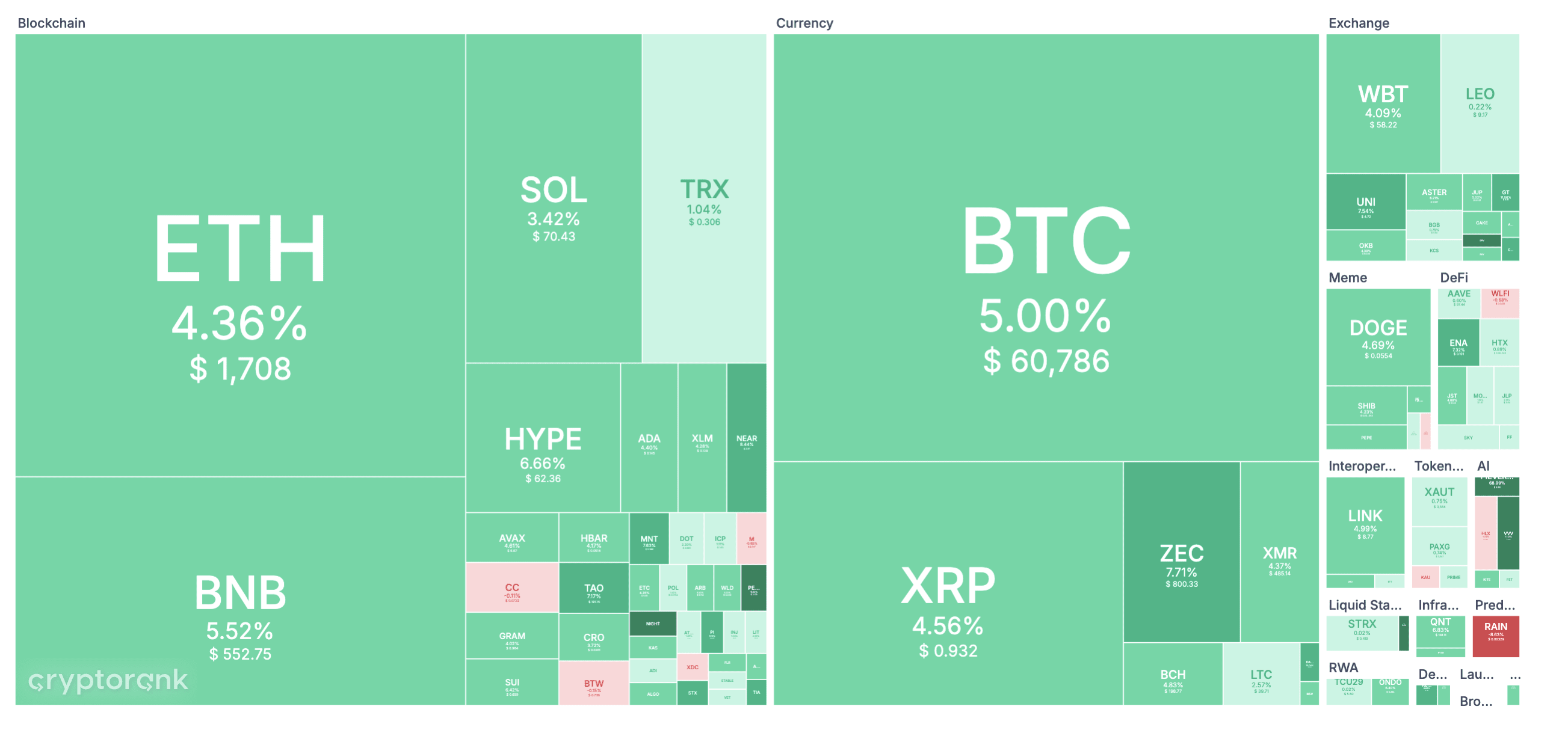
🔥🗺️Heat map shows the 7 day change in price (red down, green up) and block size is market cap
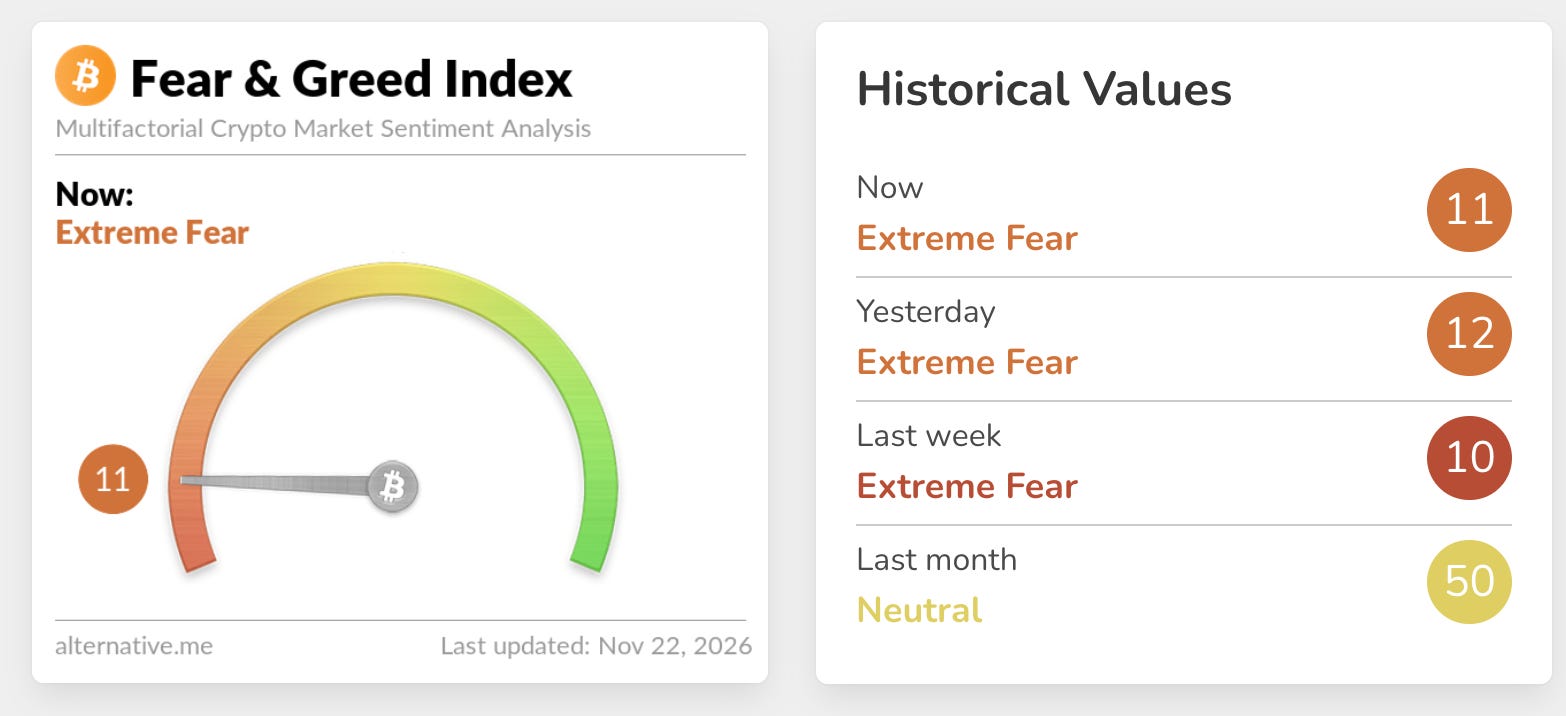
🎭 Crypto Fear and Greed Index is an insight into the underlying psychological forces that drive the market’s volatility. Sentiment reveals itself across various channels - from social media activity to Google search trends - and when analysed alongside market data, these signals provide meaningful insight into the prevailing investment climate. The Fear & Greed Index aggregates these inputs, assigning weighted value to each, and distils them into a single, unified score.

This section captures developments at the edge of new systems. New interfaces, tools, and capabilities that feel early, unfinished, or slightly ahead of their moment. I’m less interested in what’s impressive today and more interested in what might quietly reshape how people work, coordinate, and interact over time.
Manchester Experiments with a Different Model for Screen Finance
Greater Manchester is experimenting with a different approach to financing its creative economy. On 19 November, the city region announced its first seven investments through a new £10.5 million film and television production fund, committing just over £3 million to projects expected to generate almost £15 million in local production spending. The first recipients include a new location for the BBC’s The Repair Shop, several independent feature films and a television drama.
The interesting part is how the funding is structured. Rather than relying exclusively on traditional grants, the publicly backed fund combines grants for eligible local productions with recoupable investments, allowing some of the money committed to projects to be recovered through their commercial performance. Investments can reach £750,000 per production, subject to eligibility and budget limits. The fund also places considerable weight on local employment, production spending and the development of businesses that can sustain activity beyond individual projects.
Manchester is part of a wider movement across England, where regional authorities are experimenting with investment structures designed to attract production while retaining more economic activity locally. Yorkshire has operated a recoupable production fund since 2012, recycling returns into subsequent projects, while Cornwall has introduced a model combining public and private investment. These approaches remain dependent on commercial performance and continued access to finance, but they offer alternatives to funding arrangements in which each production begins another search for support.
What makes these experiments worth following is the attempt to treat creative production as an industry requiring durable financial infrastructure. Public funding is still involved, but the emphasis is gradually expanding towards investment, commercial returns and the accumulation of local capability. Whether these models can generate sufficient returns to sustain themselves remains uncertain, particularly given the unpredictable economics of film and television. For now, they provide useful examples of how the financing of creativity is beginning to change.

A Note to End On
“Theatre is part of art history ... but it is part of social history in terms of how it is financed and governed.”
August Wilson
American playwright August Wilson (1945–2005), best known for his plays Fences and The Piano Lesson, made this observation in his influential 1996 speech, The Ground on Which I Stand. Speaking about the unequal distribution of funding to Black theatre, Wilson challenged the industry to explore new financial structures that could support greater cultural independence. Thirty years later, his observation remains relevant well beyond theatre. The way creative work is financed influences which stories are told, who gets to tell them and who ultimately benefits from their success. As new models of creative finance emerge, those questions remain worth asking.