
Welcome to this week’s Field Notes, a 10-year project of mine documenting humankind’s digital transition from the field. These notes are shaped by what I’m seeing, building, and discussing as our physical and digital lives continue to converge.
- Ryan
(Connect with me on LinkedIn)

News is surface-level. Signals live underneath. This section captures developments that hint at deeper shifts in how digital systems are being built, governed, and adopted — often before they’re obvious in the mainstream narrative.
Around the world, countries are beginning to redesign themselves for a different climate. The response looks different in every location, but the direction is remarkably consistent. Adaptation is moving from emergency response towards long-term planning, engineering and investment.
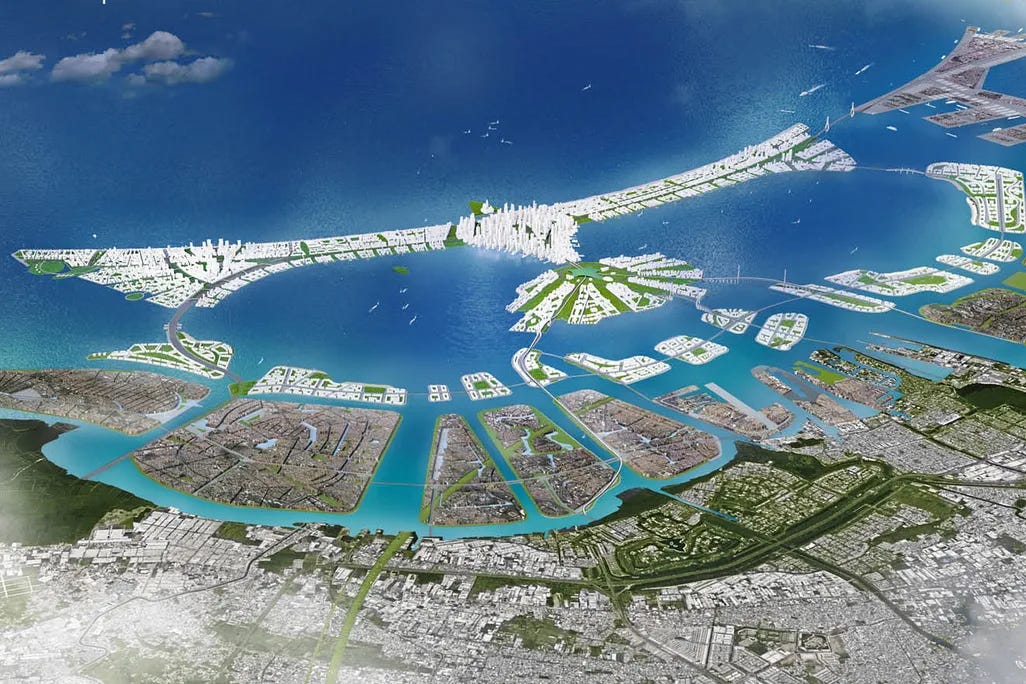
Indonesia adapts at the coastline
Indonesia is pressing ahead with plans for the Jakarta Giant Sea Wall, an ambitious coastal defence project expected to stretch around 700 kilometres along the northern coast of Java. Estimated to cost around US$80 billion and take two decades to complete, the project is intended to protect Jakarta from rising sea levels, coastal flooding and severe land subsidence. The government is now seeking international investment to help fund what will become one of the world's largest climate adaptation projects. (Reuters)
Europe adapts existing infrastructure
Across Europe, a quieter transformation is taking place. Railway operators are painting tracks white to reduce heat absorption, airports are trialling new cooling techniques for runways, and governments are deploying AI, drones and sensors to monitor infrastructure under extreme temperatures. Rather than replacing existing systems, many countries are adapting them to operate under climatic conditions they were never originally designed for. (The Japan Times)
The United States adapts governance and planning
The United States is beginning to rethink adaptation at the policy level. Communities are investing more heavily in flood forecasting, resilient building standards, microgrids and long-term hazard planning as governments increasingly recognise that responding to disasters after they occur is more expensive than preparing beforehand. Climate adaptation is gradually becoming part of how cities are governed, financed and designed. (Axios)
Taken together, these stories suggest climate adaptation is becoming its own economic transition. The challenge is no longer simply understanding a changing climate. It is redesigning the systems we depend on so they continue to function within it.

What it is
This documentary explores the Tokyo Resilience Project, an 18-year, US$109 billion programme designed to prepare one of the world’s largest cities for an increasingly uncertain future. Rather than responding to disasters individually, the project brings together flood protection, earthquake engineering, resilient power systems, public health planning and urban redevelopment into a single long-term strategy.
What stood out
The project isn’t built around one threat. Tokyo is preparing for earthquakes, floods, volcanic eruptions, pandemics and prolonged blackouts at the same time. The response isn’t a collection of isolated projects. It’s a city-wide redesign.
One example is the expansion of the G-Cans flood diversion system, an immense network of underground tunnels and reservoirs that redirects floodwater away from the city during major storms. Elsewhere, bridges are being strengthened, buildings fitted with seismic dampers, redundant power and communications networks installed, and older neighbourhoods gradually replaced with more resilient construction.
The scale is remarkable, but so is the mindset. Rather than asking what the next disaster might be, Tokyo is asking how the city should function regardless of which disaster arrives.
Why it matters
We often think of resilience as something added after a crisis. This documentary suggests the opposite. Resilience is becoming a design principle. Cities have always reflected the conditions they expected to live within. Industrial cities were built around factories. Twentieth-century cities were shaped by the motor vehicle. Increasingly, twenty-first-century cities may be designed around uncertainty itself.
Adaptation is no longer simply about protecting infrastructure. Infrastructure is becoming the mechanism through which societies adapt.

Digital assets now sit less as an idea and more as infrastructure in progress. As physical and digital life continue to converge, money and digital asset infrastructure are doing the same. What was once framed as “crypto” is increasingly showing up as rails, balance sheets, and policy conversations.
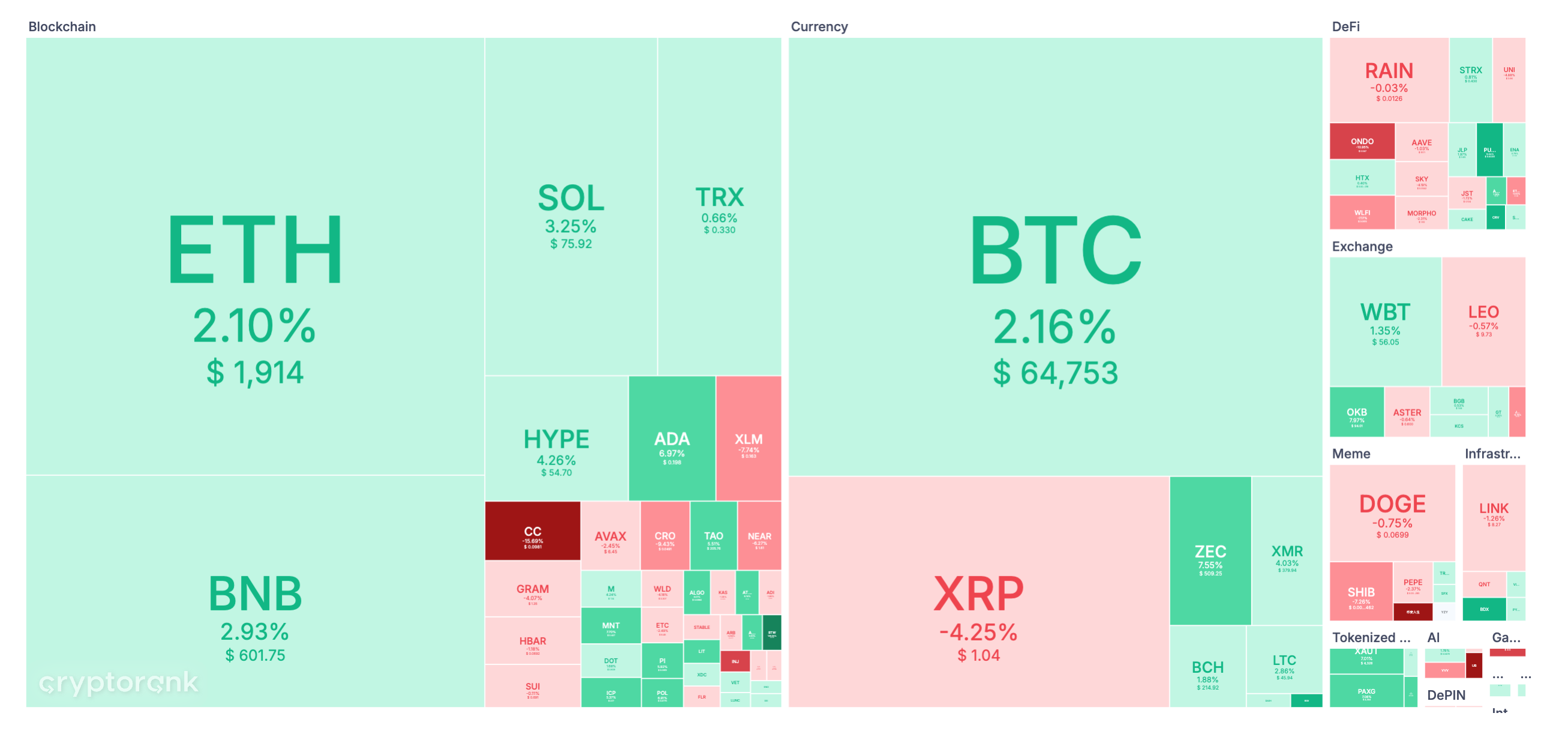
🔥🗺️Heat map shows the 7 day change in price (red down, green up) and block size is market cap
.
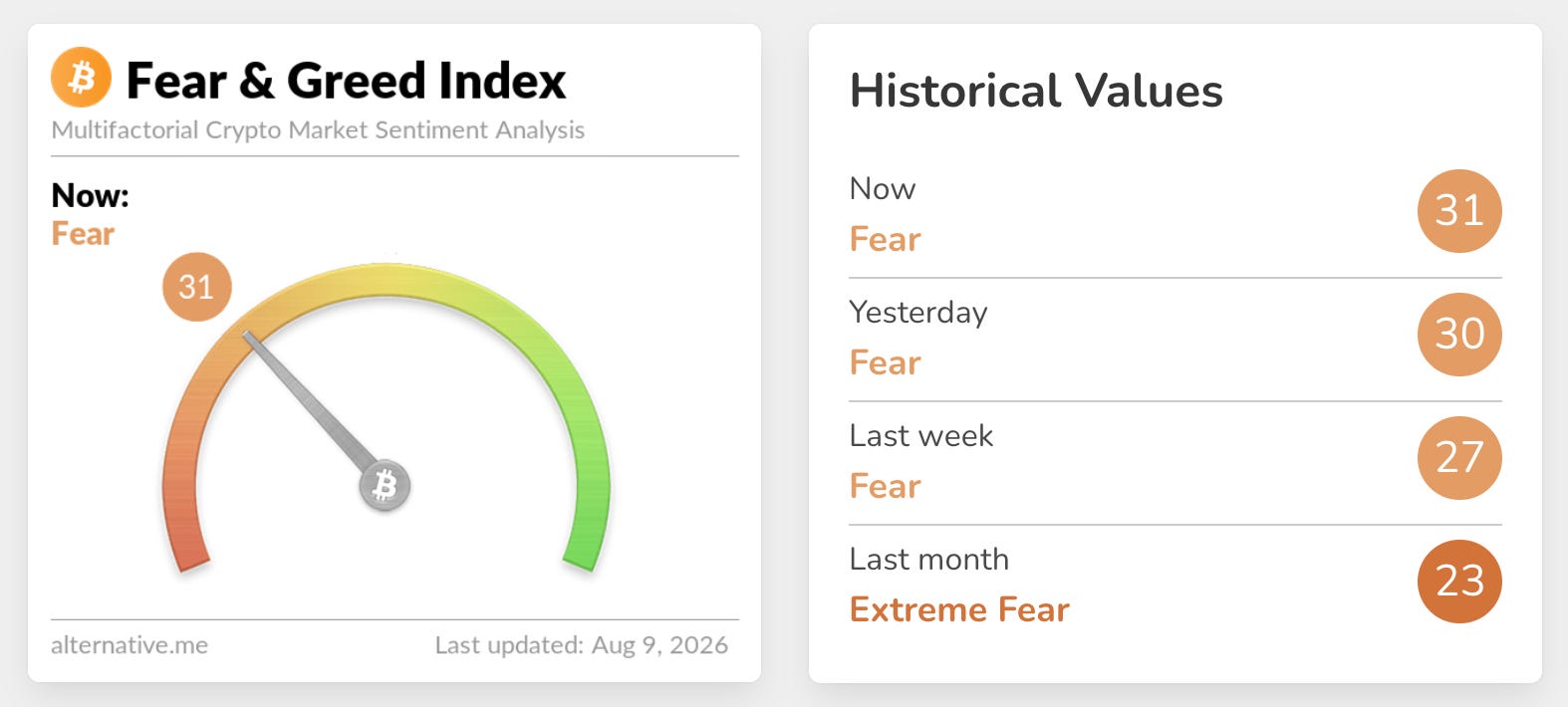
🎭 Crypto Fear and Greed Index is an insight into the underlying psychological forces that drive the market’s volatility. Sentiment reveals itself across various channels - from social media activity to Google search trends - and when analysed alongside market data, these signals provide meaningful insight into the prevailing investment climate. The Fear & Greed Index aggregates these inputs, assigning weighted value to each, and distils them into a single, unified score.

This section captures developments at the edge of digital systems. New interfaces, tools, and capabilities that feel early, unfinished, or slightly ahead of their moment. I’m less interested in what’s impressive today and more interested in what might quietly reshape how people work, coordinate, and interact over time.
Digital twins are becoming the operating system for cities
Every city has a physical form. Increasingly, many are also developing a digital one.
Known as digital twins, these virtual replicas combine data from roads, buildings, utilities, transport systems, weather stations and sensors into a living model of a city. Unlike a static map or a 3D visualisation, a digital twin evolves alongside its physical counterpart, continuously updating as conditions change.
Singapore has emerged as one of the world’s leading examples. Through its Virtual Singapore initiative, the city-state has created a detailed digital twin that allows planners, researchers and government agencies to explore how the city functions as a connected system. Urban development proposals can be tested before construction begins, emergency services can rehearse disaster scenarios, and planners can model everything from pedestrian movement and energy demand to flood risk and rising temperatures. (Singapore Land Authority)
The concept is now spreading well beyond Singapore. Cities across Europe, North America and Asia are investing in digital twins to improve transport networks, monitor infrastructure, manage utilities and strengthen resilience against natural disasters. What they share is a simple idea: understand the system before changing it.
For much of the digital era, software helped organisations record what had already happened. Digital twins shift the focus towards understanding what could happen. They create a space where ideas can be tested, failures explored and trade-offs understood before they play out in the real world.
As the cost of sensors falls and AI becomes better at analysing complex systems, digital twins are likely to become more than planning tools. They may become part of the everyday operating system of a city, quietly supporting decisions about infrastructure, transport, energy and public safety. The most interesting aspect of digital twins isn’t that they create a virtual city. It’s that they allow us to experiment without first making the mistake.

“Plans are useless, but planning is indispensable.”
Dwight D. Eisenhower
Before becoming President of the United States, Dwight D. Eisenhower served as Supreme Allied Commander during World War II, where he learned that no plan survives contact with reality. What mattered was the planning process itself. That observation feels particularly relevant to climate adaptation. No city can predict exactly how the next disaster will unfold, but the process of preparing, modelling and rehearsing different futures may prove more valuable than any individual plan.