
Welcome to this week’s Field Notes, a 10-year project of mine documenting humankind’s digital transition from the field. These notes are shaped by what I’m seeing, building, and discussing as our physical and digital lives continue to converge.
- Ryan
(Connect with me on LinkedIn)

News is surface-level. Signals live underneath. This section captures developments that hint at deeper shifts in how digital systems are being built, governed, and adopted — often before they’re obvious in the mainstream narrative.
Two stories this week pointed to a quieter shift. In one, stablecoins look less like a crypto category and more like payment infrastructure. In the other, AI shows up not in a lab or a product demo, but inside the procedural core of the judiciary. Different domains. Same underlying pattern. The technology is moving inward, toward systems that matter because they are slow, trusted, and hard to rewire.
Stablecoins are becoming payment rail
Reuters reported that OpenFX raised $94 million to expand its stablecoin-based FX and remittance network into Southeast Asia and Latin America. The company says more than 98% of transactions on its platform settle in under 60 minutes, compared with the two to five business days that still define much of the legacy cross-border system. Reuters also reported that OpenFX’s annualised payment volume grew from $4 billion to $45 billion in a year, driven by demand from fintechs, neobanks, and payroll providers. (Reuters)
What stood out is that this is not really a token story. It is a settlement story. The appeal is not ideology, nor even speculation. It is operational performance. Faster money movement. Lower friction. Better timing. That matters because once the capital starts flowing toward the boring layer, the conversation changes. Stablecoins stop looking like an alternative asset class and start looking more like programmable financial plumbing.
The deeper signal is that the market is beginning to fund the connective tissue rather than the headline. OpenFX is using blockchain-based stablecoins to modernise cross-border payments, not to build a new narrative around money, but to improve the mechanics of foreign exchange and remittance flows. That feels directionally important. Financial infrastructure tends to change slowly until it does not.
AI is entering the judiciary more quietly than the headlines suggest
Reuters also reported that 60% of U.S. federal judges are now using at least one AI tool in their judicial work, according to a Northwestern University study based on responses from 112 randomly selected federal judges. The most common uses were legal research (30%), followed by document review (16%) and editing. Only 22% said they used AI daily or weekly in their judicial role, while 38% said they had never used it at work. Reuters further reported that judges were more likely to use legal-specific tools such as Westlaw AI, CoCounsel, and Lexis+ AI than general-purpose systems like ChatGPT or Claude. (Reuters)
What stood out here is not the scale of adoption, but the setting. The judiciary is an institution built around procedure, precedent, and trust. It is not usually where new technology announces itself first. Yet AI is already being used there for bounded, document-heavy work. Not to replace judgment, but to support the routines around it. That matters because it suggests adoption may be spreading less through spectacle than through administrative usefulness. The caution remains visible. Reuters reported that one-third of judges allow or encourage AI use in chambers, 20% prohibit it, and 24% have no formal policy. More than 45% said they had received no AI training from court administration. The signal, then, is not institutional confidence. It is uneven integration. The tools are arriving before the norms have settled. That is often how these shifts begin.
What stood out
Taken together, these stories suggest that infrastructure is where the transition is becoming easiest to see. One is about money moving faster across borders. The other is about legal work becoming partially machine-assisted inside one of the slowest-moving parts of the state. Neither story feels especially futuristic. That may be the point. The most consequential changes often stop looking novel just before they start to matter.

What it is
This week’s watch is “MIT Just Found The Cause Of The AI Bubble” from Economics Explained.
The video centres on a recent MIT research effort that argues we are using the wrong tools to understand AI’s economic effects. Most public discussion still treats disruption as a question of whole jobs disappearing. The researchers argue that this is too blunt. AI tends to replace or reshape tasks inside jobs, not always the roles themselves. That matters because unemployment rates, GDP, and other familiar metrics were built to count jobs and workers, not the internal structure of work.
To get closer to that structure, the team built what they call the Iceberg Index, a model that estimates the overlap between human skills and AI capabilities, then weights that overlap by wage value. The result is less a forecast than a risk map.
What stood out
What stood out is how different the picture looks once the frame widens.
If you focus only on the tech sector, the video says AI exposure appears to account for just 2.2% of US labour market wage value. That is the visible tip of the iceberg. But when the model is applied across the whole economy, exposure rises to 11.7%, or roughly $1.2 trillion in wage value. That shifts the centre of gravity away from the usual story about coders and Silicon Valley, and toward white-collar administrative, legal, finance, and back-office work.
The geographic angle is also useful. Standard assumptions point to traditional tech hubs as the obvious centres of risk. The Iceberg Index suggests otherwise. Exposure can be higher in places with heavy concentrations of routine professional and administrative labour, even if they are far from the usual AI narrative.
The other important distinction is between technical possibility and actual adoption. The video notes that in some fields, AI may already be capable of handling a very large share of tasks, but regulation, workflow design, and the continued need for human oversight mean professional use remains much lower in practice. That gap feels important. Capability gets headlines. Adoption moves more slowly.
Why it lingers
It lingers because it offers a better map for what may be coming.
The most useful idea in the video is not that AI will destroy work overnight. It is that disruption may show up unevenly, inside occupations before it appears across them. That makes the transition harder to see with legacy measures, and easier to misread if we keep looking only for obvious signs like mass unemployment.
The Baumol’s cost disease section sharpens that further. If AI drives down the cost of cognitive work that can be automated, then the relative cost of work that remains stubbornly human, nursing, plumbing, childcare, may keep rising. That creates a different kind of pressure. Not just on workers, but on households, governments, and the broader shape of the economy.
The Iceberg Index does not tell us when the fault line will move….but it does suggest where the pressure is building.

Digital assets now sit less as an idea and more as infrastructure in progress. As physical and digital life continue to converge, money and assets are doing the same. What was once framed as “crypto” is increasingly showing up as rails, balance sheets, and policy conversations.
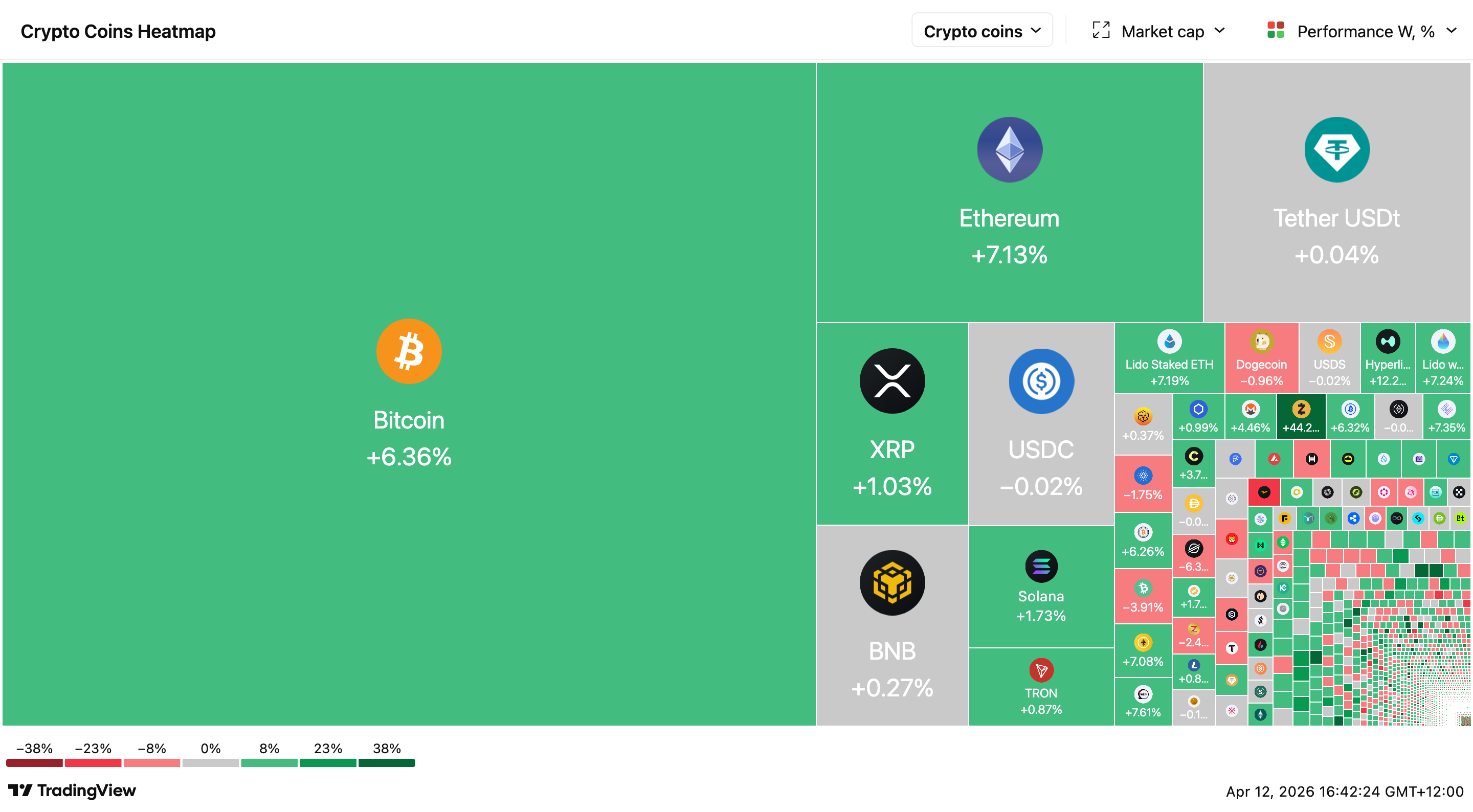
🔥🗺️Heat map shows the 7 day change in price (red down, green up) and block size is market cap.
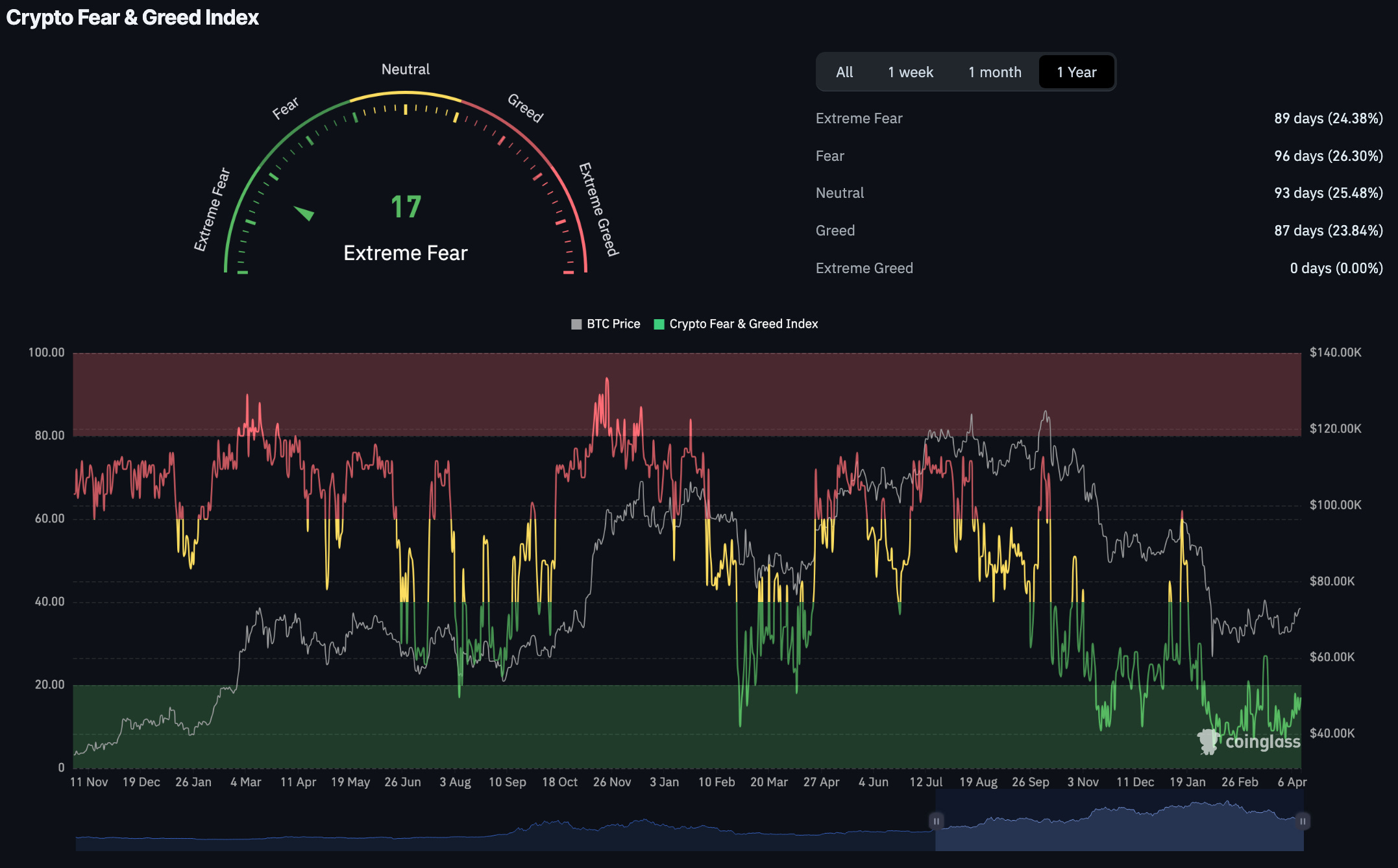
🎭 Crypto Fear and Greed Index is an insight into the underlying psychological forces that drive the market’s volatility. Sentiment reveals itself across various channels—from social media activity to Google search trends—and when analysed alongside market data, these signals provide meaningful insight into the prevailing investment climate. The Fear & Greed Index aggregates these inputs, assigning weighted value to each, and distils them into a single, unified score.

This section captures developments at the edge of digital systems. New interfaces, tools, and capabilities that feel early, unfinished, or slightly ahead of their moment. I’m less interested in what’s impressive today and more interested in what might quietly reshape how people work, coordinate, and interact over time.
A better battery is still one of the most important frontier technologies.
That is easy to forget because batteries rarely arrive with the theatre of a new interface. No glossy launch. No viral demo. Just a slow sequence of materials advances, manufacturing constraints, and promises that usually take longer than expected to harden into products.
What stood out this week was a March report on research from McGill University into all-solid-state lithium batteries, one of the longer-running ambitions in electrification. The breakthrough was not a full commercial battery. It was a materials fix to a stubborn interface problem: the resistance that builds where the ceramic electrolyte meets the electrodes, reducing efficiency and limiting energy delivery. According to the report, the McGill team addressed this by using a porous ceramic membrane filled with a small amount of polymer rather than a dense ceramic plate. The result is meant to let lithium ions move more freely while stabilising the interface for higher-voltage operation. (Tech Briefs).
The appeal of all-solid-state batteries has been clear for years. Conventional lithium-ion cells rely on liquid electrolytes, which carry safety risks because they are flammable. Solid-state designs are attractive because they promise safer operation and, potentially, better performance. The problem is that battery futures are usually won or lost at the interfaces, not in the headline concept. If one of those long-standing bottlenecks starts to loosen, even incrementally, it matters. (Tech Briefs)
What lingers here is not the usual claim that the battery revolution is finally around the corner. We have heard some version of that too many times. It is something quieter. Electrification still depends on a stack of unresolved physical constraints: safety, charging time, energy density, durability, manufacturability, cost. Software can move quickly around those limits, but it cannot abolish them. A battery advance is rarely just a battery story. It is a transport story, a grid story, and eventually a geopolitical one. The systems that look digital on the surface often still rest on chemistry underneath.
Directionally, it matters that some of the hardest problems in electrification are being worked at the level of materials and interfaces rather than just scale. The next transition may not hinge on a dramatic invention. It may come from enough small improvements in the right places that the old constraints stop holding in the same way.

“Civilization advances by extending the number of important operations which we can perform without thinking about them.”
Alfred North Whitehead
Alfred North Whitehead was an English mathematician and philosopher who later became one of the major intellectual figures of the 20th century. He began in logic and mathematics, co-authoring Principia Mathematica with Bertrand Russell, before turning toward philosophy, science, and the nature of process and change. That background matters here. Whitehead understood that progress is not only about invention. It is also about incorporation, about how complex operations become routine enough to disappear into the background of daily life. That is what gives the line its force. The most important technologies often stop feeling like technologies at all just before they begin to reorganise everything around them.