
Welcome to this week’s Field Notes, a 10-year project of mine documenting humankind’s digital transition from the field. These notes are shaped by what I’m seeing, building, and discussing as our physical and digital lives continue to converge.
- Ryan
(Connect with me on LinkedIn)

News is surface-level. Signals live underneath. This section captures developments that hint at deeper shifts in how digital systems are being built, governed, and adopted — often before they’re obvious in the mainstream narrative.
Insurance markets digest AI risk as underwriting assumptions shift
Industry commentary this week highlights that cyber and professional liability insurers are revising policy language, limits and risk models to account for the expanding threat landscape associated with AI-enabled systems and automated attacks. The shift isn’t about a single incident; underwriters are increasingly acknowledging that AI changes loss potential, threat vectors and monitoring needs in ways legacy products weren’t designed for (source).
What stands out is how risk is being priced upstream of clear regulatory rules or headline harms. When insurance markets — which by definition translate uncertainty into contractual terms and prices — begin adjusting coverage design and underwriting criteria, it suggests AI risk is no longer speculative but being internalised into contractual infrastructure. The signal here is that governance around AI is migrating into commercial risk frameworks, shaping how exposures are measured, limited and transferred well before public policy commands these changes.
Still early. But market pricing often presages formal regulation.
Universities and integrity regulators escalate response to AI-enabled academic misconduct
Australia’s tertiary regulator, Tertiary Education Quality and Standards Agency (TEQSA), issued a nationwide alert this week urging universities to respond to increasingly aggressive commercial AI cheating services that solicit and exploit students, potentially exposing them to identity and security risks. The alert directs institutions to report incidents, bolster IT defences, and set up reporting procedures for suspicious activity as generative AI use proliferates among students (source).
What stands out is how the issue has moved from individual integrity debates to a system-wide regulatory alert. Rather than institutions quietly updating policies behind closed doors, a national regulator has stepped in, framing AI-linked academic misconduct as a sectoral risk with identity and cybersecurity dimensions. The signal here is that operational governance - reporting requirements, institutional responses and risk signalling - is emerging ahead of settled norms about acceptable and unacceptable use of AI in assessments.
Still unresolved. The boundary between use, misuse and procedural enforcement continues to be negotiated.

What it is
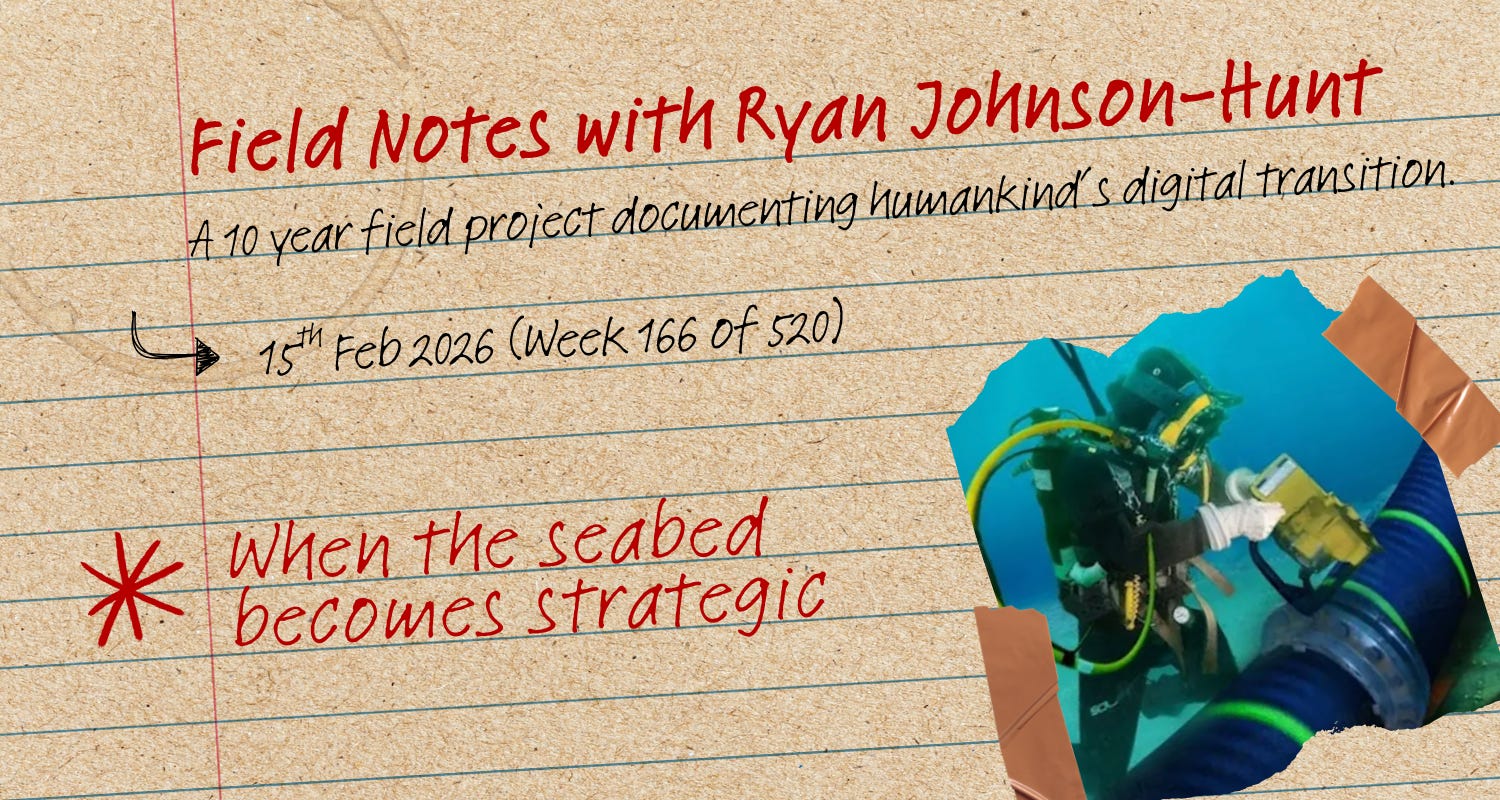
A Wall Street Journal documentary examining the strategic contest between the United States and China over undersea fibre optic cables, the infrastructure that carries the overwhelming majority of global intercontinental data.
What stood out
The emphasis is physical. Cables on the ocean floor. Ships that lay and repair them. Fewer than fifty vessels globally are capable of maintaining this network. Over 95% of intercontinental data travels not through satellites, but through glass threads beneath the sea.
The rivalry is not framed around bandwidth or speed, but control. Who builds. Who finances. Who repairs. Commercial projects increasingly shaped by state alignment. What was once mostly private infrastructure now sits squarely inside national security thinking.
Why it lingers
This feels like a reminder that the internet is territorial. Data may appear weightless, but it depends on geography, maritime access, and maintenance capacity. Control over repair ships becomes leverage. Funding decisions become geopolitical signals.
If power and compute are one constraint, the seabed is another. The physical layer has re-entered the conversation. Quietly, but decisively. Still unclear how resilient this system is under sustained geopolitical stress.
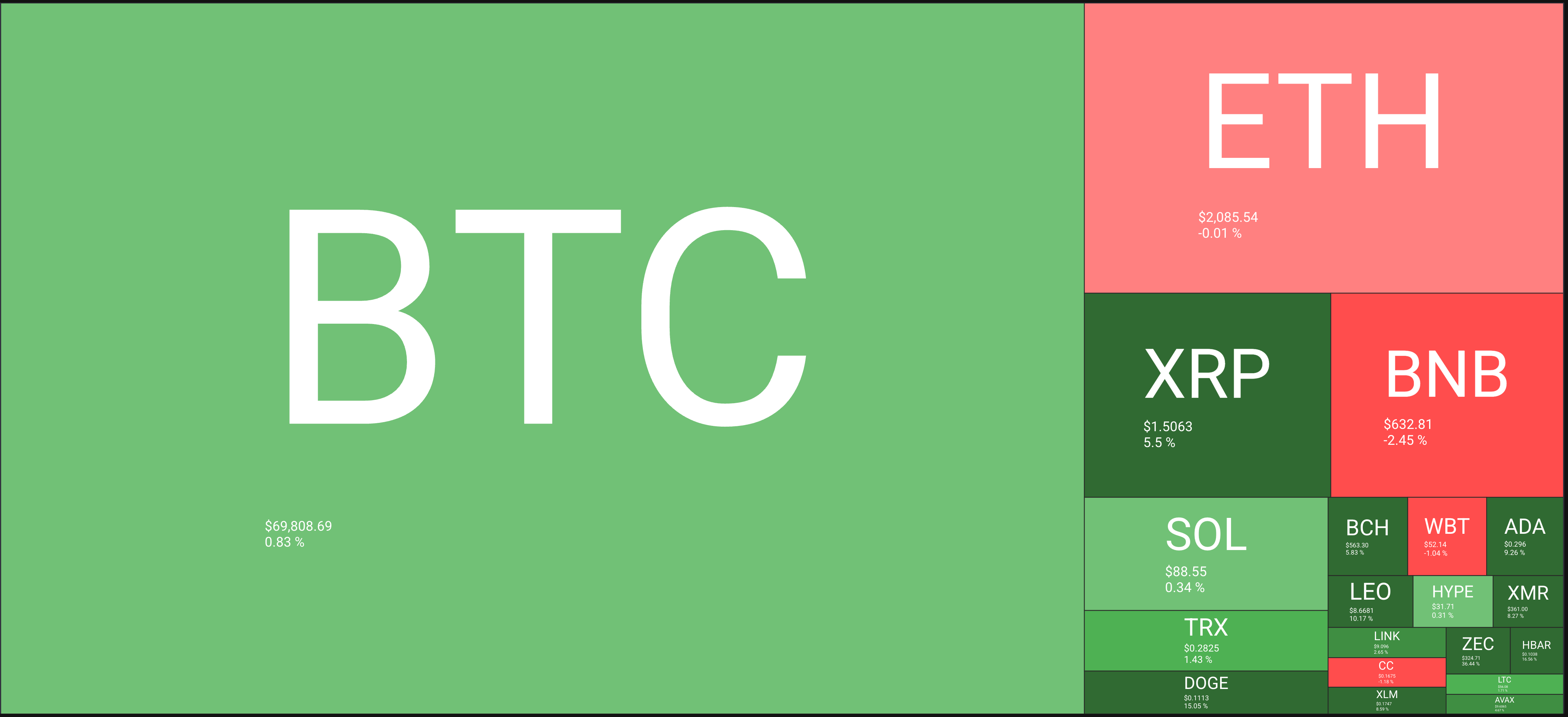
Digital assets now sit less as an idea and more as infrastructure in progress. As physical and digital life continue to converge, money and assets are doing the same. What was once framed as “crypto” is increasingly showing up as rails, balance sheets, and policy conversations.
🔥🗺️Heat map shows the 7 day change in price (red down, green up) and block size is market cap.
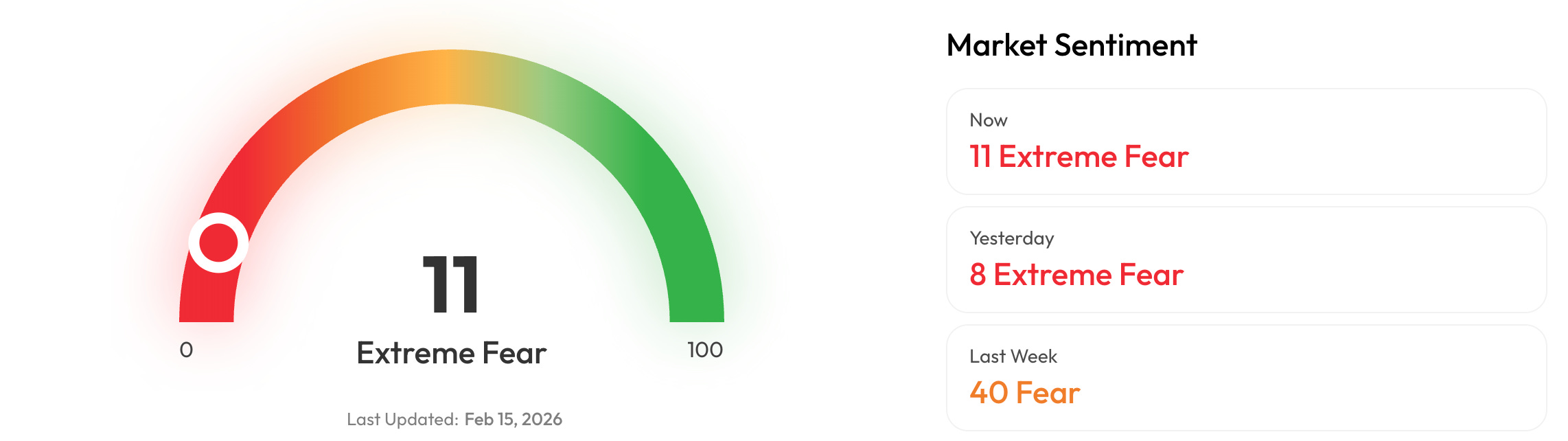
🎭 Crypto Fear and Greed Index is an insight into the underlying psychological forces that drive the market’s volatility. Sentiment reveals itself across various channels—from social media activity to Google search trends—and when analysed alongside market data, these signals provide meaningful insight into the prevailing investment climate. The Fear & Greed Index aggregates these inputs, assigning weighted value to each, and distils them into a single, unified score.

This section captures developments at the edge of digital systems. New interfaces, tools, and capabilities that feel early, unfinished, or slightly ahead of their moment. I’m less interested in what’s impressive today and more interested in what might quietly reshape how people work, coordinate, and interact over time.
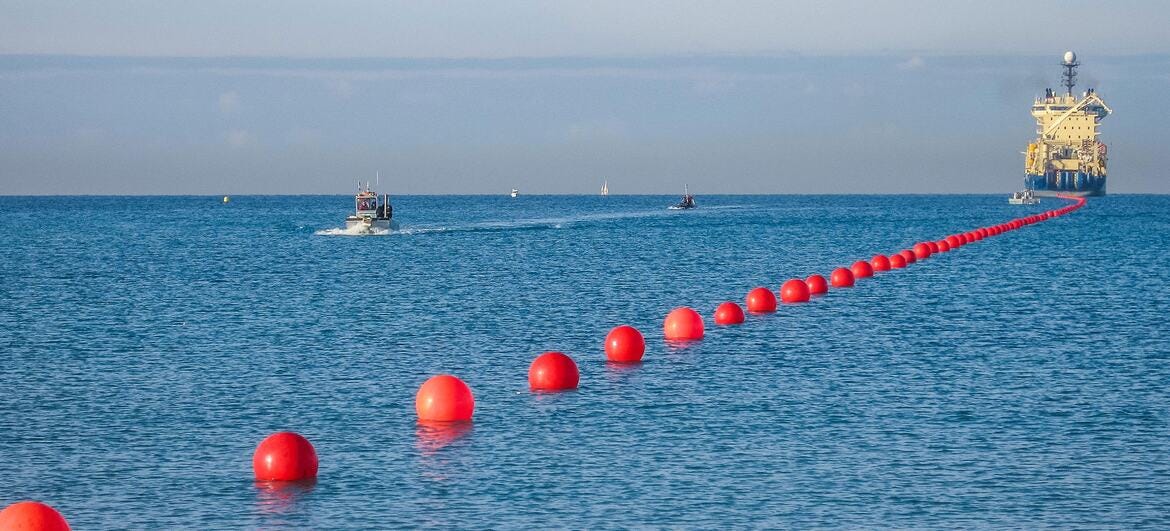
A recent UN News feature ahead of the International Submarine Cable Resilience Summit in Porto underscores how undersea fibre cables quietly carry around 99% of international internet traffic, forming what the ITU calls our “digital highways.” The piece details rising incidents, ageing infrastructure from the early 2000s build-out, and the logistical complexity of repairs that can take weeks or months, particularly across overlapping jurisdictions (source).
The signal is not new cable deployment, but repair capacity. There are 150 to 200 cable incidents annually, most caused by human activity, and only a small fleet of specialised ships capable of fixing them. In a system where milliseconds matter for markets and entire island nations can go offline for days, resilience shifts from bandwidth expansion to response coordination.
Over the next decade, this reframes digital infrastructure as a maintenance problem as much as a scaling one. Spare parts, vessel positioning, permitting speed, and diplomatic cooperation become strategic variables. Financial systems, cloud platforms, and digital payments all assume continuity at the seabed. When that assumption weakens, repair logistics begin to look less like background engineering and more like geopolitical leverage.

“The future is not a destination, it is a direction.”
Raymond Williams
Raymond Williams was a Welsh cultural theorist, novelist, and co-founder of the field of cultural studies. Writing in the mid-20th century, he was sceptical of grand narratives that treated history as moving toward a fixed endpoint. For Williams, culture was lived and contested in the present, shaped by material conditions, institutions, and everyday experience rather than abstract inevitabilities.
The line reflects that posture. The future is not somewhere we arrive once the right technology lands or the right policy passes. It is a direction of travel shaped by accumulated decisions, incentives, and habits. From the field, this feels accurate. Systems rarely flip cleanly from old to new. They drift. They are nudged. They are redirected. The work is less about predicting where we end up and more about noticing which way we are currently pointing.