
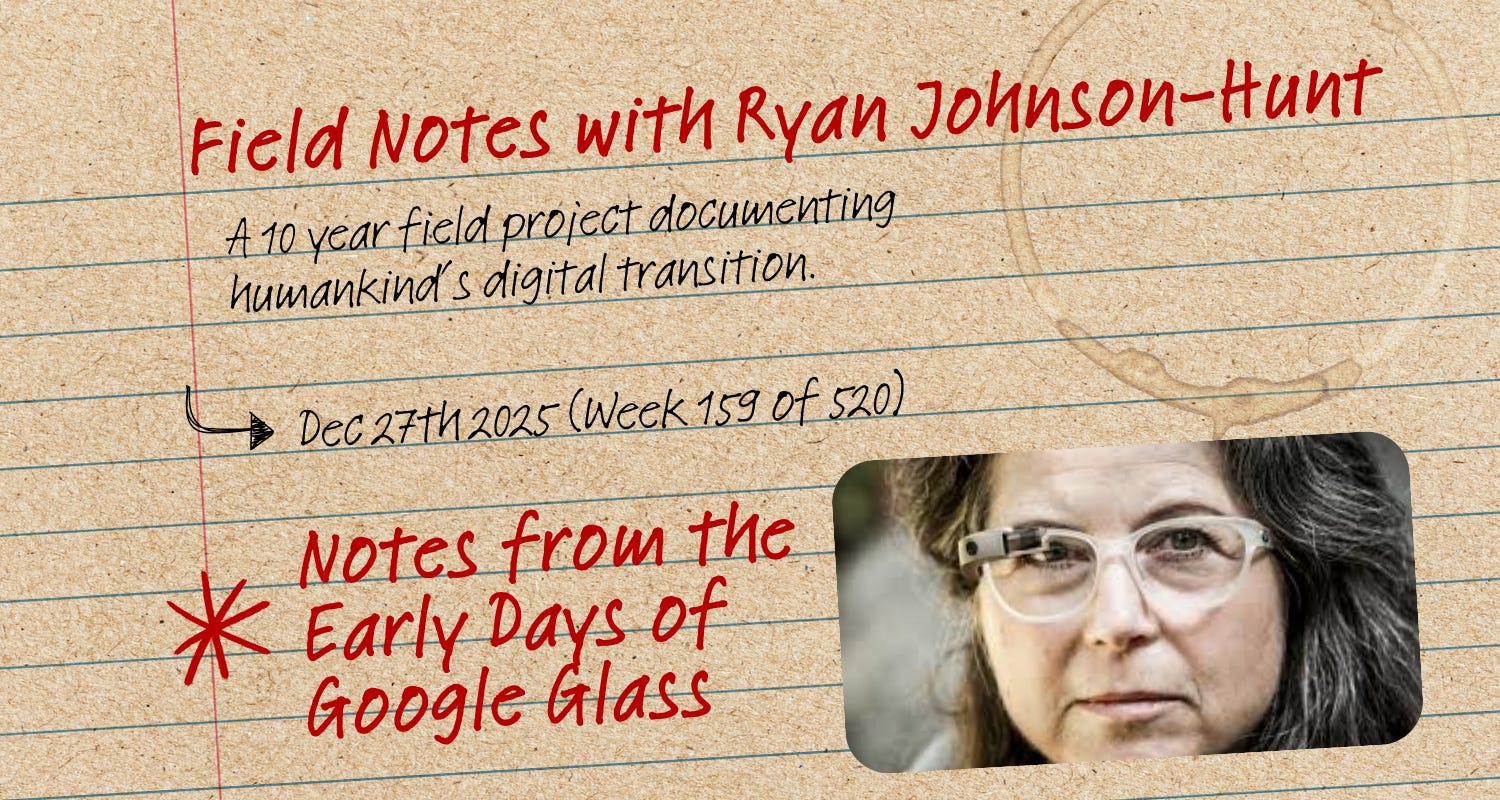
Welcome to this week’s Field Notes, a 10 year project documenting humankind’s digital transition from the field. These notes are shaped by what I’m seeing, building, and discussing as physical and digital life continue to converge.
- Ryan

News is surface-level. Signals live underneath. This section captures developments that hint at deeper shifts in how digital systems are being built, governed, and adopted — often before they’re obvious in the mainstream narrative.
New Zealand’s government app signals digital identity infrastructure
New Zealand has released its Govt.nz app, initially a portal for services and information, but positioned to host digital driver licences and other accredited credentials once legislation passes in 2026. This shift from a utility app to a potential digital wallet for identity credentials suggests a deliberate move towards embedding digital identity as public infrastructure rather than a pilot feature, raising questions about uptake, trust, and optionality. (source)
Coinciding with the app rollout, a re-branded industry group called Tech New Zealand is forming a broad ecosystem hub spanning AI, fintech, agritech and digital identity. The organisational evolution points to shared governance frameworks and cross-sector coordination emerging as priorities for the local tech ecosystem rather than isolated sector initiatives


What it is
A Moonshot Podcast Deep Dive episode where Astro Teller speaks with Ivy Ross and Isabelle Olsson about the early design and development of Google Glass.
What stood out
The conversation stays close to material constraints. Weight, balance, social comfort, and the human face as an interface. The designers describe Glass less as a product vision and more as a sequence of unresolved frictions. People did not want what the team expected, and the team did not yet have the language to explain what they were making.
Why it lingers
There is a recurring pattern here. New interfaces tend to arrive before the social rules that make them legible. Timing emerges not as a market question but a cultural one. The episode quietly suggests that Glass did not fail on ambition or craft, but on arriving before society had built the norms to absorb it.
Worth noting how often “too early” is only visible in retrospect.

Digital assets now sit less as an idea and more as infrastructure in progress. As physical and digital life continue to converge, money and assets are doing the same. What was once framed as “crypto” is increasingly showing up as rails, balance sheets, and policy conversations.
🔥🗺️Heat map shows the 7 day change in price (red down, green up) and block size is market cap.

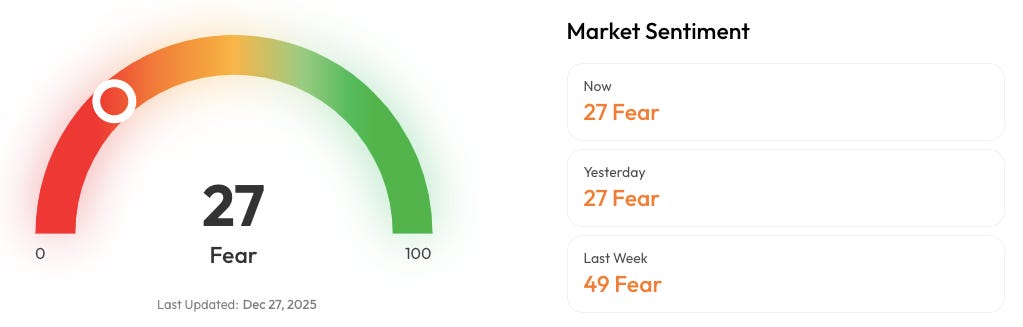
🎭 Crypto Fear and Greed Index is an insight into the underlying psychological forces that drive the market’s volatility. Sentiment reveals itself across various channels—from social media activity to Google search trends—and when analysed alongside market data, these signals provide meaningful insight into the prevailing investment climate. The Fear & Greed Index aggregates these inputs, assigning weighted value to each, and distils them into a single, unified score.

This section captures developments at the edge of digital systems. New interfaces, tools, and capabilities that feel early, unfinished, or slightly ahead of their moment. I’m less interested in what’s impressive today and more interested in what might quietly reshape how people work, coordinate, and interact over time.
A recent article in The Verge examines how the rollout of generative AI-powered home assistants in 2025 has, paradoxically, made basic smart home functions less reliable. Instead of improving everyday tasks such as turning on lights or running routines, AI systems like Amazon’s Alexa Plus and Google’s Gemini for Home often fail at these deterministic chores even as they handle more complex language interactions better. (source)
This feels early but important because it exposes a behavioural and design gap: systems built to be flexible and conversational struggle with the repetitive, predictable work users actually expect them to do. It hints at an incentive mismatch where companies chase broad capabilities and natural language flair over reliability and precision, turning early adopters into unwitting testers. It surfaces the unintended consequence that greater AI sophistication can, in some contexts, degrade rather than enhance everyday technology experiences and trust in consumer AI.

“What matters rarely announces itself.”
— Annie Dillard
Most consequential shifts arrive indirectly. They surface as small frictions, subtle workarounds, or behaviour that doesn’t quite fit the story being told. By the time something feels obvious, the moment of leverage has often passed. These notes exist to mark what feels directionally important before it hardens into consensus.